

Recent developments from two major healthcare companies, Moderna Inc and Merck & Co, have shown promising results in treating skin cancer[1].
Pharmaceutical companies and biotechnology companies can be volatile as share prices are heavily rewarded or punished for progress in drug development.
Healthcare is a catch-all term used to define a typically defensive sector, but that masks several distinct sub-sectors with their own risk and reward dynamics.
On Wednesday 19th August news sources reported that a treatment developed by healthcare companies Moderna Inc and Merck & Co helped reduce the recurrence of skin cancer[2].
In its release, the two companies reported that people with skin cancer who received both Moderna’s therapy and Merck’s therapy experienced a reduced risk of their cancer returning and had fewer incidences of their cancer spreading. This is compared to those receiving Merck’s therapy alone, which is the current standard treatment[3].
Resuscitation?
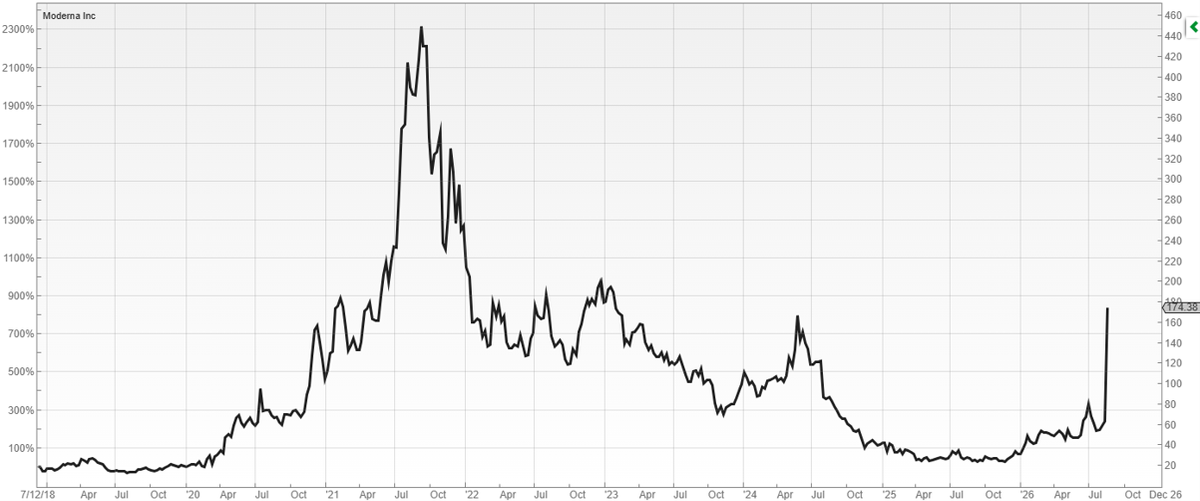
During the Covid pandemic, Moderna was catapulted into the spotlight after they developed, manufactured, and distributed one of the world's first mRNA-based vaccines. Much was promised of the mRNA technology at the time, but the subsequent results were not fruitful and the Moderna share price has faded after an initial excitement-driven spike.
Source: Alpha Terminal
However, the chart also shows a big rise on 19th August 2026[4] rewarding the latest announcement and providing further fuel to the excitement around the mRNA platform.
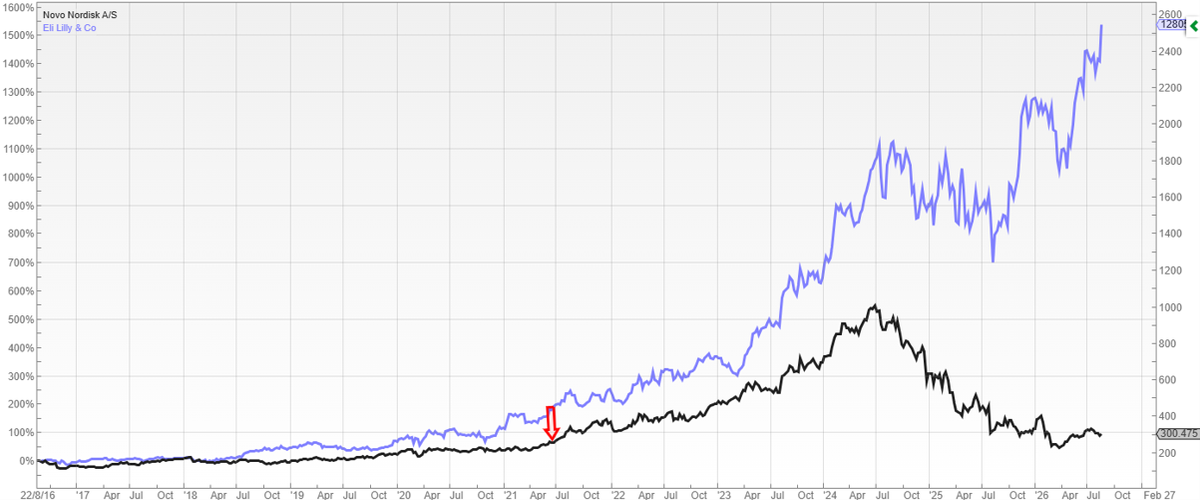
Another company of note that has delivered a revolutionary treatment to the market is Novo Nordisk (Novo). Novo released injectable weight loss treatment Wegovy on 4th June 2021. As the chart below shows, Novo shares (black line) initially benefited from an enormous rise, only to fall back to their pre-Wegovy levels two years later. The fall has been attributed to the increase in competition from other producers of weight-loss drugs, along with some disappointment from investors that development of an effective, less-invasive, oral treatment has not been quick enough. Also on the chart is competitor pharmaceutical firm, Eli Lilly (blue line), which has been challenging Novo for dominance in the weight loss market.
Source: Alpha Terminal
Checking the vital signs
It is tempting to think of healthcare as one homogenous sector, however there are many different sub-sectors under the healthcare umbrella.
Each sub-sector has unique characteristics. The pharmaceutical sector is generally viewed as a defensive investment, benefiting from stable demand for medicines, strong cash flows, and predictable earnings, although patents expire, creating a cliff edge in revenue and regulatory decisions can create volatility.
At the other end of the spectrum, the biotechnology sector is typically considered a higher-risk, higher-reward segment, where company valuations are heavily influenced by clinical trial results, regulatory approvals, and the potential commercial success of innovative therapies.
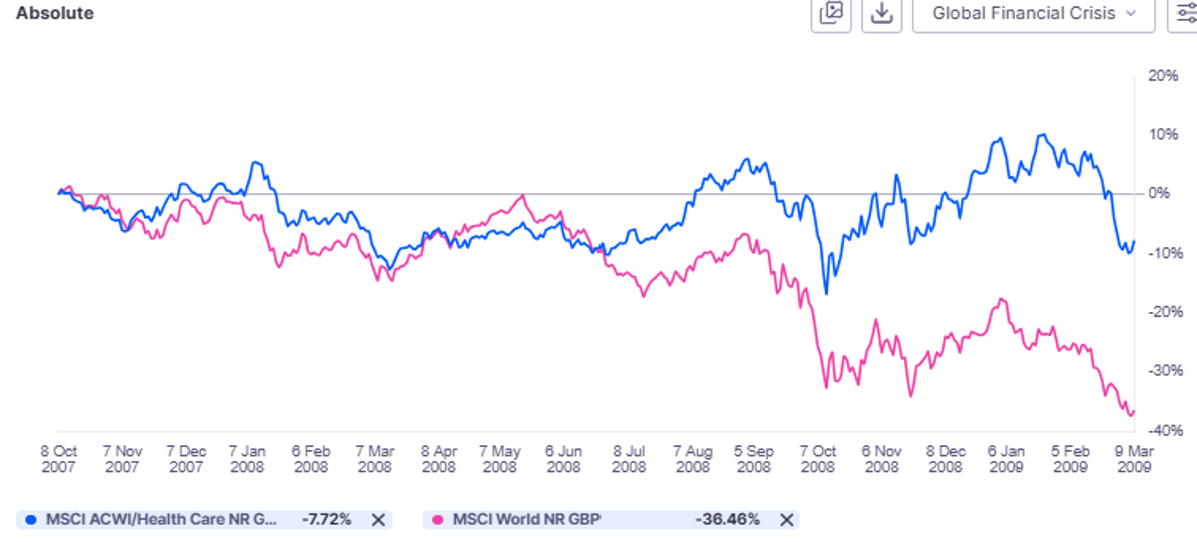
A key attraction for most investors when thinking about the sector is that healthcare is an essential spend for consumers. This is why the MSCI ACWI Health Care index considerably outperformed the MSCI World index during the Financial Crisis of 2007-2008.
Bowmore portfolios
Healthcare is a feature within our Core and Passive portfolios. There are several structural tailwinds we see supporting the sector over the long-term. Firstly, demographic trends are positive as the ‘Boomer’ generation are reaching the 75-year age range where typical spending on healthcare products and services increases.
Furthermore, big pharmaceutical companies are facing many patents expiring around the 2030 mark[5] whilst they sit on over $2 trillion of cash. [6] We believe we will see an acceleration of acquisitions as bigger firms look to build their drug pipelines by buying smaller, innovative firms.
Artificial Intelligence (AI) is also expected to increase the volume of new drug discovery and clinical trials, whilst also making the review process much swifter for submissions to medical bodies such as the US Food and Drug Administration (FDA).
On a more cyclical basis, the tariff crosshairs have shifted away from healthcare since 2025 as firms have gradually signed individual deals with the US administration.
The fund we own within our Core model, the Polar Capital Healthcare Opportunities Fund, holds 45% Pharmaceuticals, 21% Biotechnology, with the remaining split between medical equipment, facilities, services, supplies and distributors[7].
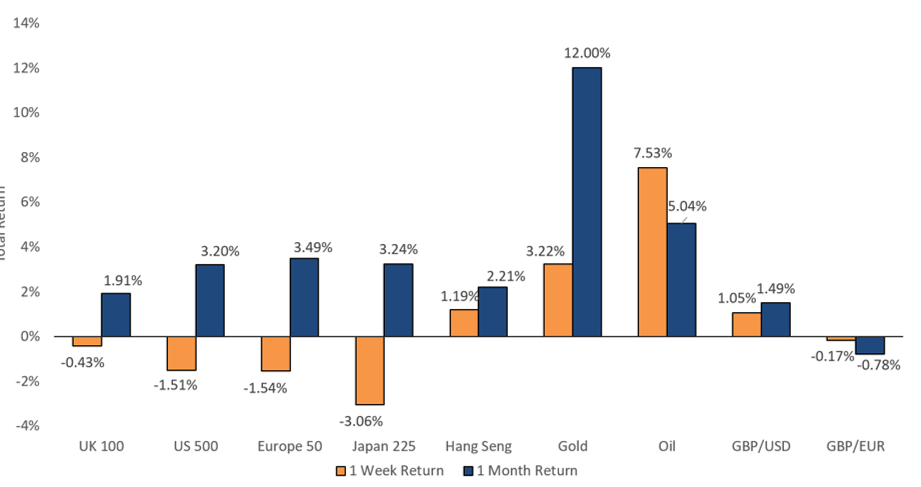
It is also quietly ticking along delivering strong performance in the background. After a lull in April 2025 due to the tariff worries, the I share class has delivered 47 % total return over the last three years (to 20th August 2026)[8].
Source: AlphaTerminal, data as at 20/08/2026
The value of your investments can go down as well as up, so you could get back less than you invested. Past performance is not a guide to future performance.
Sources:
1 Moderna and Merck Revive mRNA Hopes With Melanoma Trial Success - Bloomberg
2 Moderna and Merck Revive mRNA Hopes With Melanoma Trial Success - Bloomberg
3 Promising Results for mRNA Cancer Vaccine from Moderna and Merck
4 Alpha Terminal
5 $300 Billion in Pharma Revenue Loses Patent Protection by 2030 | DeepCeutix Strategic Briefings
6 Life sciences M&A spending accelerates, as the industry faces growth gaps and looks to AI and China for innovation | EY - Global
7 Polar Capital Funds plc - Healthcare Opportunities Fund
8 AM Insights